
Beat Marketplace Platform
- Client
- Beat Marketplace Startup (Beat2K Studio)
- Duration
- Ongoing / Production
- Built with
- Next.js 15, TypeScript, Tailwind CSS, Shadcn UI, React 19, WooCommerce REST API, Wavesurfer.js, Embla Carousel, React Table
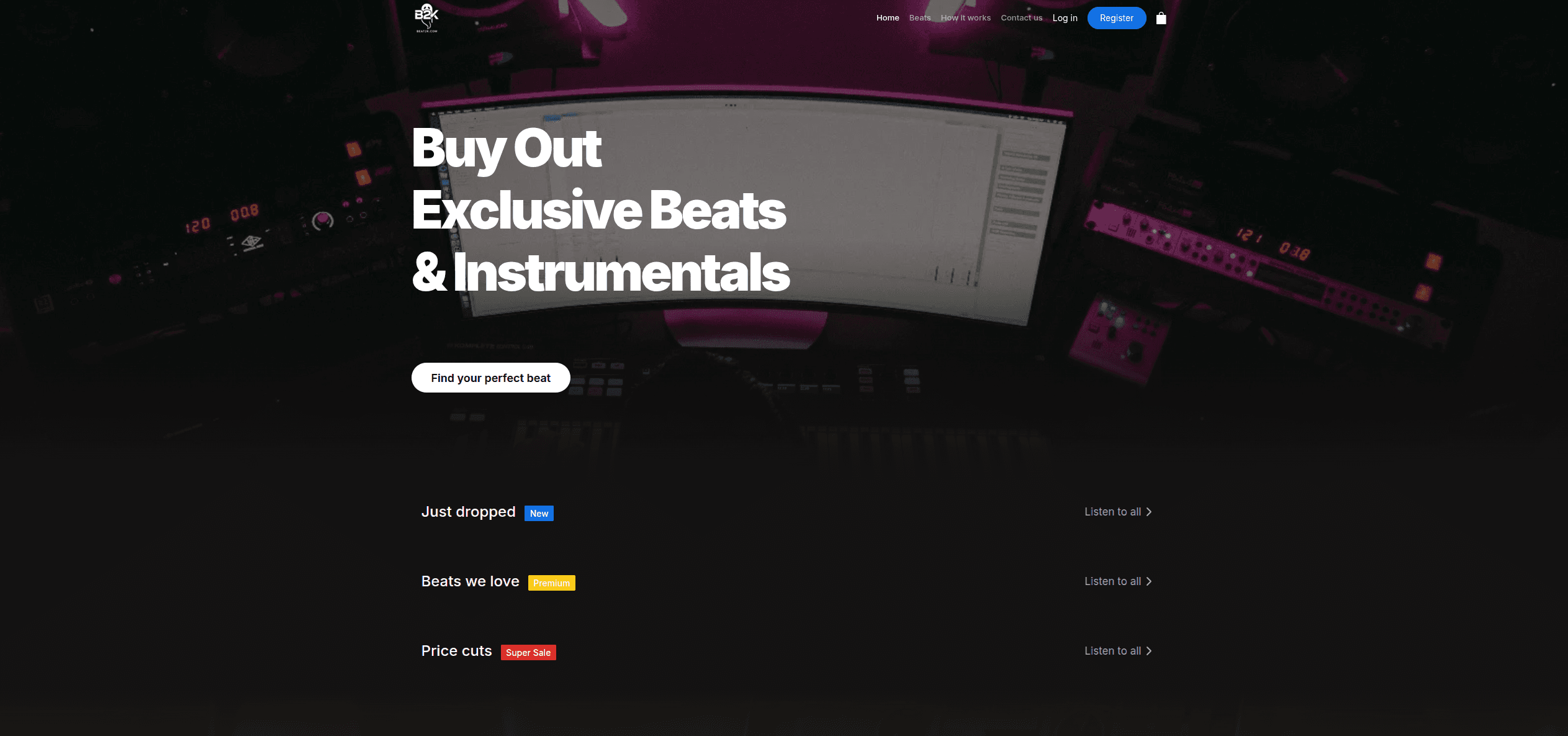
A beat marketplace platform is an online storefront built specifically for music producers to sell beats direct to buyers — browsing, previewing, licensing, and checkout, all tuned for audio rather than physical products. Beat2K Studio is one of these, built as a Next.js 15 storefront on top of a WooCommerce headless backend: WordPress/WooCommerce runs the catalog, orders, and customer records, while the Next.js frontend owns every pixel of the buyer experience.
Architecture
Headless commerce split across two systems:
- Frontend (Next.js 15, App Router) — all UI/UX: browse, cart, checkout, auth, dashboard, account management
- Backend (WooCommerce REST API) — product catalog, order processing, and customer records, called from server actions rather than client-side fetches
Core capabilities
- Beat Browsing & Purchase — full catalog browsing, cart, and checkout flow tuned for digital beat licensing rather than physical goods
- Audio Preview — Wavesurfer.js waveform player so buyers can preview a beat and scrub the waveform before buying, not just play a flat audio tag
- Authentication — login, signup, JWT-based session handling, and password reset, backed by a custom auth context provider
- Buyer Dashboard — orders, downloads, wishlist, followed producers, saved payment methods, and saved addresses, all in one account area
- Seller Info Pages — producer profile pages so buyers can see who they're buying from
- Data Grids — React Table powering the dashboard's order/download/wishlist tables
- Carousel Browsing — Embla Carousel for featured/browsable beat collections on the storefront
Engineering notes
- Shadcn UI (Radix primitives) for accessible, consistent component behavior across the storefront and dashboard
- Custom cart and auth context providers manage client-side session/cart state on top of the WooCommerce-backed data
- Server actions call the WooCommerce REST API directly rather than routing through client-side fetches, keeping store credentials off the client
Why build a beat marketplace on Next.js instead of a stock WooCommerce theme?
A stock WooCommerce storefront isn't built for audio-first shopping — waveform previews, licensing-style checkout, and a producer-facing dashboard all need custom UI. Keeping WooCommerce as a headless backend for catalog and orders while building the entire frontend in Next.js gets the flexibility of a fully custom storefront without giving up WooCommerce's existing commerce/order infrastructure.
How does a headless WooCommerce storefront handle checkout and orders?
The Next.js frontend calls the WooCommerce REST API through server actions to create and manage orders, so the actual order/customer data still lives in WooCommerce while the buyer never sees WordPress at all. This keeps the checkout flow fully custom while WooCommerce still handles order storage, customer records, and any existing store-management tooling.
What does a producer/buyer dashboard need beyond basic order history?
Beyond past orders, a beat-marketplace buyer dashboard needs downloads (since beats are digital delivery, not shipped goods), a wishlist, followed producers, and saved payment methods/addresses for repeat purchases — Beat2K Studio's dashboard covers all of these rather than just an order list.